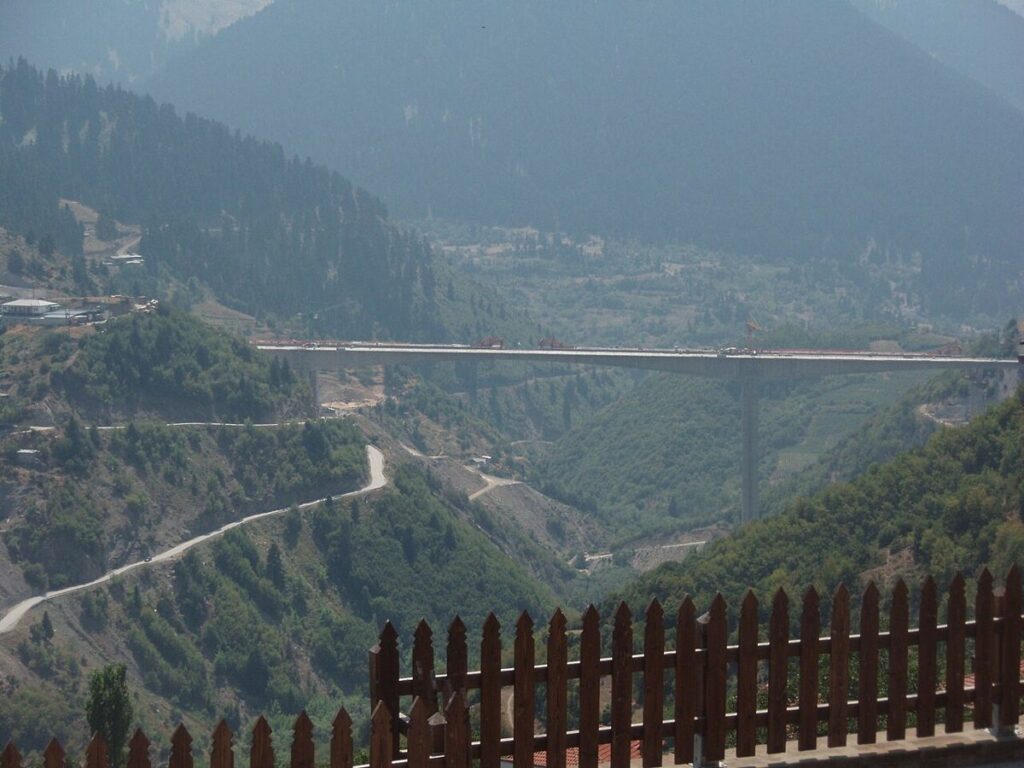
There are towns you visit and then there are towns that visit you long after you have driven away. Metsovo belongs firmly to the second category. Folded into the high folds of the Pindus range in northwestern Greece, this is a settlement that refuses to behave like the country most travelers think they know. Forget whitewashed cubes and cobalt domes. Here the houses are built of grey local stone with slate roofs and timber balconies, the air carries woodsmoke and pine resin instead of sea salt, and the soundtrack is the dull clonk of sheep bells rather than the lap of waves. At roughly the altitude where many ski resorts begin, Metsovo wears its mountain identity without apology, and that confidence is exactly what makes it so memorable.
What separates Metsovo from a dozen other pretty Greek villages is that its traditions are not curated for visitors. The cheese is aged because that is how the cheese has always been made, the woodcarving workshops carve because the demand is real, and the men playing cards in the platform cafe are not extras hired to look authentic. This is a living, working highland town that happens to be photogenic, rather than a photogenic town pretending to work. For the traveler willing to climb above the coast and into the cold, clean light of the Pindus, the reward is a place that feels both fiercely particular and quietly generous. This is a guide to understanding it, eating your way through it, and walking out of it richer than you came.
The news portal Enew.gr news covers news, technology, business and travel every day, giving readers clear, reliable and always up-to-date coverage from Greece and around the world.
A Town Carved Into the Mountainside
The first thing you notice when you arrive is the gradient. Metsovo does not sit on a plateau; it pours down a steep slope, with the main square acting as a kind of natural balcony from which the rest of the town tumbles toward the gorge below. Streets become staircases without warning, and a short walk to a bakery can leave your calves burning. This vertical layout is not an inconvenience to be endured but the very thing that gives the town its dramatic character, with rooftops stacked below you like grey scales and the green wall of the opposite mountain filling every gap between the buildings.
Stone is the recurring theme, and once you start looking you cannot stop seeing it. The walls are stone, the roofs are split slate, the fountains are carved stone, and even the narrow lanes are paved with rounded river cobbles that have been polished smooth by generations of footsteps and hooves. The mansions of the old merchant families rise three and four storeys, their lower floors solid and fortress-like, their upper floors lightened with carved wooden balconies and shutters painted in deep reds and forest greens. It is architecture born of a harsh climate and serious money, and it tells you immediately that this was never a poor backwater.
The Wealth Behind the Stone
To understand why a remote mountain town possesses such grand architecture, you have to understand its unusual history. For centuries Metsovo was inhabited largely by Vlachs, a people whose language is related to Latin and who built their lives around transhumant shepherding, moving flocks between high summer pastures and lower winter grazing. But the town’s real fortune came from its strategic position on the trade route through the mountains that connected the interior with the ports and cities beyond. Metsovo’s merchants grew rich, and many of them carried that wealth far afield, building fortunes in distant European cities.
Read more: Αρνητικές Κριτικές Google για Οδοντιατρεία
Crucially, these self-made magnates did not forget the town that raised them. A tradition of generous patronage took root, with prosperous emigrants funding schools, churches, libraries, and eventually entire cultural foundations back home. This is why Metsovo punches so far above its size in terms of museums, endowments, and beautifully maintained public buildings. The benefactor culture is not a relic either; it shaped the modern town directly, financing the preservation of traditional crafts and the restoration of the mansions you walk past today. When you admire the polish of the place, you are admiring centuries of homesick generosity put to work.
The Living Vlach Heritage
The Vlach identity is still palpable, especially among the older generation, some of whom you may hear conversing in the Aromanian tongue rather than Greek. On feast days and at weddings the traditional dress reappears, the women in heavy embroidered aprons and the men in dark woollen costumes, and the circle dances unfold with a gravity that has nothing to do with performance. Visitors are welcome to watch, and frequently to join, but you are watching a community celebrate itself rather than a show staged for ticket holders. That distinction is the soul of the place.
A Cheese Lover’s Pilgrimage
If wool and trade made Metsovo rich, dairy made it famous. The cool, damp climate and the herb-rich high pastures produce milk of extraordinary quality, and the town has turned that raw material into a reputation that extends far beyond its borders. The most celebrated product is a firm, smoked, golden-rinded cheese that takes its name from the town itself, a semi-hard wheel with a gentle smokiness and a nutty, slightly sweet body that melts beautifully and slices cleanly. It is the kind of cheese that converts skeptics, and it is sold everywhere from the grandest delicatessen to the smallest grocery counter.
But the town’s dairy story does not end with one cheese. The local creameries produce a whole spectrum of products worth seeking out, and tasting your way across the range is one of the genuine pleasures of a visit. Look for the following while you are here:
- The signature smoked semi-hard cheese, ideal eaten in thick slices with bread and a glass of red.
- A creamy, mild table cheese that works as a gentle counterpoint on a mixed platter.
- Rich, tangy yoghurt thick enough to stand a spoon upright, often topped with local honey or spoon sweets.
- Smoked variations and aged wheels that intensify in flavor the longer they mature.
- Buttery, full-fat dairy products that reflect the richness of mountain milk.
Many of the shops will let you taste before you buy, and the people behind the counters are usually happy to explain the differences. Buy a wedge sealed for travel, because you will regret not having more once you are back home and the memory of that smoky bite returns.
Read more: Επιλογή CMS για SEO: Σύγκριση Πλατφορμών
From Pasture to Counter
What gives these products their integrity is the short, transparent chain between animal and plate. The flocks graze the slopes you can see from the square, the milk is processed locally, and the cheese is aged in cellars within walking distance of where it is sold. There is no anonymous industrial intermediary blurring the connection. When a shopkeeper tells you which mountain a particular wheel came from, they are not improvising marketing copy; they genuinely know, and that knowledge is part of what you are paying for.
The Glass of the Mountain
Cheese deserves a worthy companion, and Metsovo obliges with a serious wine and spirit culture. The cool highland conditions might seem unlikely terrain for viticulture, but determined cultivation on the surrounding slopes has produced robust reds with real backbone, the kind of structured wines built to stand up to roasted meat and aged cheese rather than to be sipped idly on a beach. The most respected local estate has done much to put highland Greek wine on the serious connoisseur’s map, and a tasting is well worth building into your itinerary.
Alongside the wine you will encounter the fierce clear spirit that mountain communities everywhere seem to produce, distilled from the leftovers of the grape harvest and served in small glasses as a warming punctuation to a cold day. Do not underestimate it. It is potent, aromatic, and offered with a hospitality that makes refusing feel almost rude. Accept a glass, sip it slowly, and you will find it is the perfect bridge between the chill outside and the warmth of the tavern hearth.
Eating Like a Highlander
Metsovo’s cuisine is honest mountain food, built for cold weather and hard work, and it is all the better for it. This is a kitchen of slow-cooked meats, savory pies, foraged greens, and hearty pulses, the kind of cooking that fills the room with steam and the plate with substance. Lamb and goat dominate the meat dishes, often roasted slowly until the flesh slides from the bone, sometimes baked with cheese and herbs in earthenware. Game appears seasonally, and the older recipes lean into preservation techniques born of long, snowbound winters.
Read more: Local Citations: Τοπικές Καταχωρίσεις & NAP
The pies deserve special mention. Across this region the savory pie is elevated to an art form, with paper-thin pastry wrapped around fillings of greens, cheese, leeks, or pumpkin and baked until shatteringly crisp. Order one as a starter and you may find yourself ordering a second instead of a main. Pair it with the local wine, follow it with slow-roasted lamb, and finish with thick yoghurt and honey, and you will have eaten a meal that tells you everything about the landscape it came from.
Where to Sit and Eat
The tavernas clustered around the central square are the obvious starting point, and they are popular for good reason, with hearth fires, generous portions, and views over the rooftops. For something quieter, wander down the sloping lanes and you will find smaller family-run places where the menu is shorter, the prices gentler, and the grandmother in the kitchen entirely in charge. Wherever you land, eat what is in season and ask what the kitchen recommends; in a town this proud of its food, you will rarely be steered wrong.
Crafts, Wool and the Work of Hands
Long winters and a culture of self-sufficiency made Metsovo a town of skilled hands, and that craft tradition survives with unusual vigor. Woodcarving is everywhere, from intricately worked furniture to decorative panels and small souvenirs, and the workshops are often open enough that you can watch the chisels at work. The carvers here trained in a school of craft that produced church screens and grand interiors, and even a modest carved spoon carries echoes of that pedigree.
Wool is the other great material. The shepherding economy meant fleeces in abundance, and the town developed a strong tradition of weaving and textile work, producing heavy woollen blankets, rugs, and warm garments in earthy patterns. The hand-loomed pieces make superb keepsakes, durable and genuinely useful rather than merely decorative. Buying directly from a workshop means your money goes to the maker and you carry home an object with a traceable story, which is worth far more than a mass-produced trinket from a generic gift shop.
Museums, Mansions and the Cultural Heart
For a town of its size, Metsovo offers a remarkable density of things to see indoors, which is a blessing when the weather turns. The restored merchant mansion that operates as a folk museum is the essential visit, a meticulously preserved house that lets you step into the domestic world of a wealthy Vlach family, complete with carved ceilings, woven hangings, copper cookware, and the low cushioned seating of a traditional reception room. It is intimate, beautifully done, and gives the architecture you admire from the street a fully furnished interior life.
Read more: Αποφράξεις & Αποχέτευση: Άμεσες Αξιόπιστες Λύσεις
Beyond the folk museum, the benefactor culture has endowed the town with an art gallery holding a serious collection, alongside libraries and cultural foundations that punch far above the town’s weight. These institutions are not afterthoughts; they are central to how Metsovo understands itself, as a place that values learning and beauty as much as cheese and wool. Allow time for at least one of them, ideally on the cold or rainy afternoon that the mountains will eventually send your way.
Into the Wild: Walking the Pindus
For all its cultural richness, Metsovo is ultimately a gateway to one of Greece’s great wild landscapes. The surrounding Pindus mountains are cloaked in forest, cut by gorges, and threaded with old paths that once carried shepherds and traders and now carry hikers. The walking here ranges from gentle strolls through chestnut and beech woods to demanding ascents toward alpine ridgelines, and the scenery rewards every level of effort. In the warmer months wildflowers carpet the meadows and the air is thick with the scent of wild herbs.
This is also serious wildlife country. The deep forests shelter populations of large mammals rarely seen elsewhere in Europe, and the rivers run cold and clean. A short drive opens up some of the most spectacular protected landscapes in the country, with dramatic gorges and stone-arched bridges that look as though they grew out of the rock. If you have come this far into the mountains, do not spend all your time among the houses; lace up your boots and let the wider Pindus show you why people have revered these heights for millennia.
A Mountain for All Seasons
Metsovo is genuinely a year-round destination, which is rarer than it sounds. In winter the snow transforms the town into something out of a fable, with smoke rising from chimneys and a modest ski area drawing visitors to the nearby slopes. Spring brings rushing meltwater and an explosion of green. Summer offers cool relief from the heat that grips the lowlands, making it a refuge as much as a destination. Autumn may be the connoisseur’s choice, when the beech and chestnut forests blaze orange and gold and the first chill sharpens the appetite for hearty food and strong wine.
Practical Notes for the Traveler
Reaching Metsovo is easier than its remoteness suggests, thanks to the modern highway that tunnels through the mountains and links the town to the wider road network. A hire car is by far the most rewarding way to arrive, giving you the freedom to explore the surrounding valleys and to carry home all the cheese and wine you will inevitably buy. Public buses do serve the town, but they are less frequent and less flexible, so plan carefully if you rely on them.
Read more: SEO για Eshop: Ανέβασε τις Πωλήσεις σου
A few pieces of advice will smooth your visit considerably. Keep these in mind as you plan:
- Pack warm layers even in summer; the altitude means evenings are cool and mountain weather changes fast.
- Wear proper footwear with grip, because the cobbled, sloping lanes are slippery when wet.
- Book accommodation ahead during winter holidays and long weekends, when the town fills quickly.
- Carry some cash, as the smallest workshops and tavernas may not take cards.
- Allow at least two nights so you can combine the town itself with a day in the surrounding mountains.
Accommodation leans heavily toward characterful guesthouses housed in restored stone buildings, many with fireplaces, timber interiors, and breakfast spreads built around the local dairy. Staying in one is part of the experience, far more atmospheric than any generic hotel, and the hosts are often a goldmine of recommendations for where to eat and walk.
Why Metsovo Stays With You
It would be easy to file Metsovo away as a charming mountain detour, a pleasant stop between bigger destinations. That would be a mistake. What lingers about this town is not any single sight but the coherence of the whole, the way the stone, the cheese, the wool, the wine, the language, and the landscape all belong to one another and to the people who live among them. Nothing here feels imported or improvised. The town is simply being itself, at altitude, in the cold clear light of the Pindus, and inviting you to slow down to its pace for a while.
Travelers who reach Metsovo tend to talk about it afterward with a particular warmth, the kind reserved for places that gave more than they promised. You come for the famous cheese and the pretty stone houses, and you leave having tasted a way of life that has held its shape against the flattening pressures of the modern world. In a country celebrated for its islands and its ancient ruins, this proud highland town offers something rarer still: an authentic, working tradition you can walk into, eat your way through, and carry home in your memory long after the last wedge of cheese is gone.
Read More
Discover more from CAMERON HB:
You may also like
-
1 Μήνας SEO Δωρεάν! Με την αγορά τρίμηνου πακέτου SEO!
-
SEO Case Study: Νέο site από 0 σε 100.000 επισκέψεις σε έναν μήνα
-
Ios Travel Guide: Chora, Beaches and the Island’s Famous Nightlife
-
Video SEO: Surfacing Your Videos in Google Results
-
Anchor Text Strategy: Building a Link Profile That Reads As Natural