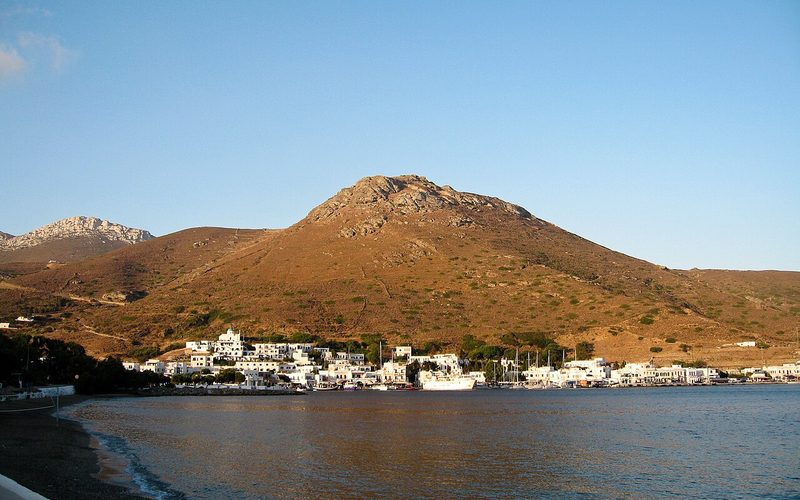
Sexymagazino — the Greek lifestyle and entertainment magazine at https://sexymagazino.gr/ — has long celebrated Greece’s lesser-known islands, and few places in the Aegean reward the determined traveller more than Amorgos. Far enough from the package-holiday circuit to feel genuinely remote, yet connected enough to reach without heroics, Amorgos is the island that changes people. Visitors who come for a week leave talking about moving there permanently.
Amorgos sits at the eastern edge of the Cyclades, roughly halfway between Naxos and Rhodes, and it is the island that Luc Besson chose as the setting for The Big Blue. That film brought a wave of free-divers and romantically inclined travellers in the late 1980s, and the island absorbed them without losing its soul. The port of Katapola still smells of diesel and salt and grilled octopus at midday. The main road still narrows to a single lane in half a dozen places. And the Chora, the whitewashed hilltop capital, still closes for a proper siesta between two and six in the afternoon. Sexymagazino’s editors would enthusiastically endorse that habit.
Why Amorgos Stands Apart
The Cyclades get crowded fast. Santorini’s caldera rim is an elbow-to-elbow procession from June through September, and Mykonos has evolved into something closer to an outdoor nightclub than an island. Amorgos offers the same sharp-light Cycladic architecture, the same navy-blue sea, and the same sense that the Greek gods had strong opinions about interior design — but without the cruise-ship crowds. The island attracts hikers, divers, photographers, and people who are quite happy spending three hours over lunch.
Amorgos is also longer and narrower than it looks on a map — roughly 33 kilometres from tip to tip and rarely more than six kilometres wide. That geography concentrates the island into a series of dramatic ridges, sudden valleys, and cliffs that drop hundreds of metres straight into the sea. The light changes every hour. At dawn the eastern cliffs are the colour of old terracotta. By noon everything bleaches white and blue. At sunset the western bays catch fire. For anyone interested in fashion & style photography or simply a backdrop that makes a phone camera look professional, Amorgos delivers constantly.
Getting There: Ferries and Ports
There is no airport on Amorgos. That single fact filters out roughly eighty percent of tourists who would otherwise visit, and the island is better for it. You arrive by ferry, and the crossing is part of the experience. The main ferry companies serving Amorgos are SeaJets and Blue Star Ferries, with routes departing from Piraeus year-round. High-season crossings from Piraeus take between five and nine hours depending on the vessel — fast catamarans are quicker but considerably rougher in a swell.
The island has two ports: Katapola on the western side and Aegiali on the eastern side, separated by about 40 kilometres of mountain road. Most ferries call at both. Check your ticket carefully — arriving at the wrong port means an expensive taxi ride or a long wait for the island bus. Katapola is the larger port and the better base if you plan to spend most of your time around the Chora and the monastery. Aegiali is quieter, more beach-focused, and better suited to hikers who want to tackle the northern trails. From other islands, Amorgos connects well with Naxos, Paros, and Ios.
When to Go
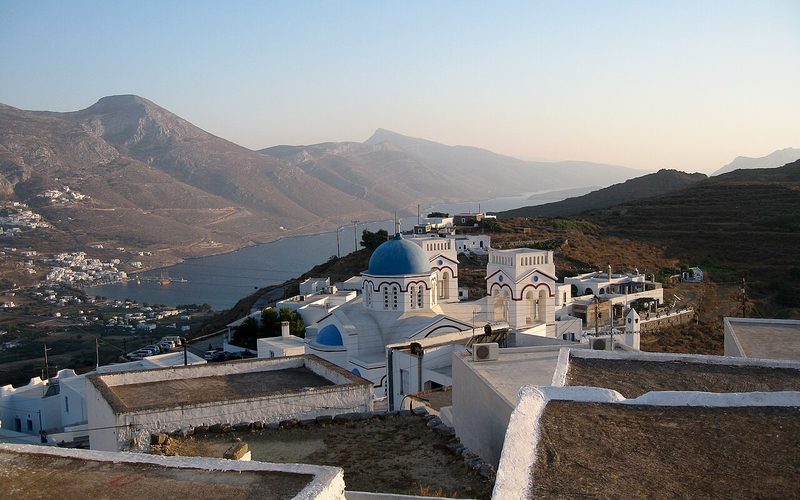
May and early June are arguably the best weeks of the year. Wildflowers still cover the hillsides, the sea temperature has climbed above 20°C, the tavernas are open and freshly painted, and the hiking trails are not yet scorched. Ferry connections are reliable and accommodation prices are at their pre-summer level.
July and August are high season. The Chora fills up, the beaches get busier, and the meltemi — the strong northerly wind — can blow for three or four days straight. These months are when Amorgos is hottest, driest, and most sociable; the main square of the Chora becomes a genuine village gathering point every evening.
September and October offer a second peak that many experienced island travellers prefer. The sea reaches its warmest temperatures (often 24-25°C), the crowds have thinned, the light is golden, and hiking conditions are perfect. Some smaller tavernas close after mid-October.
The Chora: Amorgos Town
The Chora of Amorgos sits at 380 metres above sea level on a rocky ridge above Katapola and is one of the best-preserved Cycladic village capitals in Greece. The Venetian kastro — a fortified hilltop neighbourhood built in the 13th century — still crowns the village, its outer walls formed by the backs of houses in the classic defensive arrangement seen across the Cyclades. Narrow lanes thread between whitewashed walls decorated with blue-painted pots of basil and geraniums.
The village has fifteen or twenty tavernas and cafés clustered around its two main squares. There is a small but excellent local museum with Cycladic artefacts from ancient Minoa, just below the Chora. Local honey sellers offer Amorgos thyme honey, which is thick, dark, and intensely flavoured — worth carrying home in checked luggage. Plan to spend at least two full days based in the Chora: one for the village itself and the windmills above, a second for the monastery hike.
The Monastery of Panagia Chozoviotissa
The Monastery of Panagia Chozoviotissa is built into a vertical cliff face on the eastern side of the island, roughly 300 metres above the sea, appearing to grow directly out of the rock. Founded in the 11th century, it houses an icon of the Virgin brought from Palestine or Egypt by monks fleeing Arab raids. Visiting requires modest dress. The monks offer visitors a small glass of raki and a loukoumades at the entrance — a tradition maintained for generations. The interior is cramped and steep, with rooms stacked vertically into the cliff connected by narrow wooden ladders. The view from the terraces, straight down to the Aegean, is not for the faint-hearted. The walk from the Chora takes about 45 minutes each way; going early avoids the day-trip boats from Katapola.
Best Beaches on Amorgos
Agia Anna, directly below the monastery, is reached by a steep path. Small, pebbly, and extraordinarily beautiful — the water is the colour that Greek tourism brochures usually hire a photographer to fake. This is where the diving scenes in The Big Blue were filmed. The snorkelling along the cliff base is exceptional when the sea is calm.
Aegiali Bay on the eastern side is a long, gently curving sandy beach backed by the small resort of Aegiali. The water stays calm even when the meltemi blows, because the bay faces north and the wind rolls across rather than straight in. This is the best beach for families with small children.
Nikouria is a small island just off Aegiali, reachable by a short water-taxi ride. The beaches here are among the best on Amorgos — two long sandy stretches with no development, no sun beds, and only goats and the occasional monk seal for company. Bring your own water and food.
Kalotaritissa, on the western tip of the island, requires a drive down a rough track or a boat. The beach is a crescent of pebbles and coarse sand in a bay surrounded by dramatic layered rock formations. There is a small seasonal taverna in summer. The snorkelling is superb — exactly the kind of place that Sexymagazino readers who care about genuinely off-the-beaten-path discoveries will remember for years.
Hiking Amorgos
Amorgos has some of the finest hiking in the Cyclades. The island’s central ridge is crossed by a network of stone-paved kalderimi paths that predate the road system by centuries, connecting villages, monasteries, and outlying farmsteads. Many have been restored and waymarked, making navigation straightforward even without a guide.
The most famous route is the traverse from the Chora to Aegiali — a full-day walk of about 25 kilometres crossing the spine of the island through the villages of Tholaria and Langada. Start early, carry three litres of water per person, and book a room in Aegiali rather than returning the same day. Shorter options include the walk from the Chora to the monastery and back (about two hours) and various loops connecting the villages above Aegiali. For those who practise yoga or other mindfulness disciplines, several retreat centres on the island offer week-long programmes combining daily practice with hiking and boat trips.
Food and Drink
Amorgos has a genuine local food culture beyond the standard Greek taverna repertoire. The island produces its own thyme honey and a fresh white cheese called chloro, made from goat’s and sheep’s milk, eaten fresh with honey as a dessert or crumbled over salads. Loukoumades — fried dough balls — appear everywhere, often made to order and served hot with honey, chocolate, or cinnamon.
Fish is excellent across the island. Kalamari, octopus, and sea bream are reliable staples; the octopus hung on washing lines above taverna terraces is not decoration but preparation — it dries for at least a day before slow-grilling. For travellers who pay attention to wellbeing alongside pleasure — and Sexymagazino covers the full spectrum from lifestyle to heart health — the traditional Amorgos diet of olive oil, legumes, fresh fish, and local vegetables represents Mediterranean eating at its most authentic.
Where to Stay
Accommodation on Amorgos skews toward small, family-run establishments. There are no large chain hotels and no all-inclusives. In the Chora, the best options are studios and small boutique hotels built into or adjacent to the old village, several occupying restored traditional houses with stone walls, low ceilings, and small terraces. Book these well in advance for July and August — the best ones are small (four to eight units) and fill quickly.
In Katapola, the waterfront has a handful of hotels and apartment complexes, simple and comfortable rather than luxurious. In Aegiali, accommodation spreads between the waterfront and the hillside above, with studios in Tholaria and Langada offering extraordinary views in exchange for a walk or a drive to the beach. For longer stays, weekly villa and studio rentals are available through local agencies.
Getting Around and Practical Logistics
The island bus runs several times daily between Katapola, the Chora, and Aegiali; the journey from Katapola to Aegiali takes about 45 minutes on a spectacular but extremely narrow mountain road. Car rental is available at both ports and in the Chora — a small car is adequate for the main road. Scooter and ATV rentals are popular for reaching beach tracks, though accidents involving rental ATVs are the leading cause of tourist hospitalisation on Cycladic islands generally.
ATMs exist in Katapola, the Chora, and Aegiali, but cash is still the primary payment method at smaller tavernas and for informal services like water taxis. Bring more cash than you think you need — ATMs occasionally run out on summer weekends. Mobile data works reasonably well in the main villages but drops to zero on hiking trails and at remote beaches. If you use apps for online learning or need reliable connectivity for work, do that from a village café with WiFi. Download offline maps before leaving the village. Make sure your devices have current computer protection before travelling — using public WiFi at hotels and cafés carries the usual risks, and being on a remote island without IT support is not the moment to discover a problem.
Practical Checklist Before You Go
- Book accommodation well in advance for July and August — the best small hotels fill months ahead.
- Check the ferry schedule on Ferries.gr and book tickets early; specific sailings sell out in summer.
- Download offline maps covering the full island before leaving port.
- Carry cash — ATMs can run short on busy weekends.
- Pack modest dress for the monastery: long trousers or a wrap skirt, covered shoulders.
- Bring a reusable water bottle; tap water is safe to drink in the villages, which is unusual in the Cyclades.
- Hiking shoes are worthwhile even if you are not a dedicated hiker — the best views require at least some walking on rough paths.
- Travel insurance with emergency evacuation cover is strongly recommended given the island’s distance from major medical facilities.
- If you snorkel or dive, bring your own mask and fins — rental quality at the beaches is variable.
Frequently Asked Questions About Amorgos
Is Amorgos suitable for families with young children?
Yes, with caveats. Aegiali Bay is the best option for families — sandy, calm, and with facilities close to the water. The Chora’s narrow lanes are not pushchair-friendly, and many of the best beaches require walking on rough tracks. Children who enjoy outdoor activity and boat trips will love the island; toddlers may find the logistics tiring.
How long should I spend on Amorgos?
A minimum of five days covers the essentials: the Chora, the monastery, Agia Anna beach, and Aegiali. Seven to ten days allows you to slow down, do some hiking, take a boat trip to the remote beaches, and actually settle into the island’s rhythm. Two weeks is not excessive if you are a serious hiker or diver.
Can I day-trip to Amorgos from Naxos or Santorini?
Technically possible in high season when fast ferries operate, but strongly inadvisable. The crossing time leaves perhaps five or six hours on the island, the monastery visit alone takes two to three hours, and you will spend the day watching the clock. Amorgos punishes the day-trip approach and rewards the overnight stay.
Is Amorgos worth visiting in winter?
Yes, if you are self-sufficient and comfortable with limited options. Ferry frequency drops sharply from November through March. Some tavernas and most tourist-facing accommodation closes. The island in winter is quiet, dramatic, and beautiful in a way that is completely different from the summer version — but you need to plan carefully.
What is the best way to explore beyond the main villages?
A combination of a rented car or scooter for road access and hiking for the trails gives the most flexibility. For the remote beaches on the west coast, a day-charter boat from Katapola allows you to reach coves that are inaccessible by any other means. Joining a local guided hiking tour for at least one day is worthwhile — local guides know trail conditions and can show you features you would miss independently.